

Authority v Leadership: The Difference That Shapes Your Team
The distinction between authority v leadership is often misunderstood, particularly when someone steps into a leadership role for the first time.
Authority brings with it a level of legitimacy. It gives you the right to make decisions, to set direction, and to hold people accountable within a defined structure. That structure is important. It creates clarity, consistency, and a sense of order within a team.
However, authority alone does not create leadership.
Leadership is not something that is conferred through a title. It is something that is experienced by others. It becomes visible in whether people trust you, whether they feel able to contribute openly, and whether they are willing to engage beyond what is formally required of them.
This distinction is not simply philosophical. It is reflected in leadership research, which consistently differentiates between positional authority and relational influence, grounded in trust, credibility, and connection, as highlighted by this article from Our Lady of the Lake University.
Understanding this difference is often the point at which leadership begins to shift in a meaningful way.
From compliance to commitment
Authority is highly effective at creating movement. It ensures that expectations are clear, standards are upheld, and work is delivered in line with organisational needs. In many environments, this alone can appear to be effective leadership.
Over time, however, its limitations become more apparent.
When authority is the primary driver, people tend to operate within the boundaries of what is required, rather than stepping beyond them. Ownership remains concentrated with the leader, and while performance may be maintained, energy and engagement can fluctuate. What often sits beneath this dynamic is compliance rather than commitment.
Leadership, by contrast, creates a different quality of engagement.
When leadership is present, people are more likely to take responsibility, to contribute ideas, and to remain invested even when challenges arise. Their engagement is not driven solely by expectation, but by a sense of alignment and trust.
This distinction is also reflected in research exploring motivation and influence, where authority is associated with compliance, while leadership supports deeper engagement and internal commitment, as discussed in this Journal from The Leadership Quarterly: Reflections on leadership, authority and lessons learned.
Leadership as it is experienced
One of the most important shifts in understanding leadership is recognising that it is not defined by intention, but by experience.
Two individuals can hold the same level of authority and yet create entirely different environments for the people around them. One may generate compliance, while the other fosters genuine engagement and ownership.
The difference does not sit in the role itself. It sits in the relationship between the leader and the team.
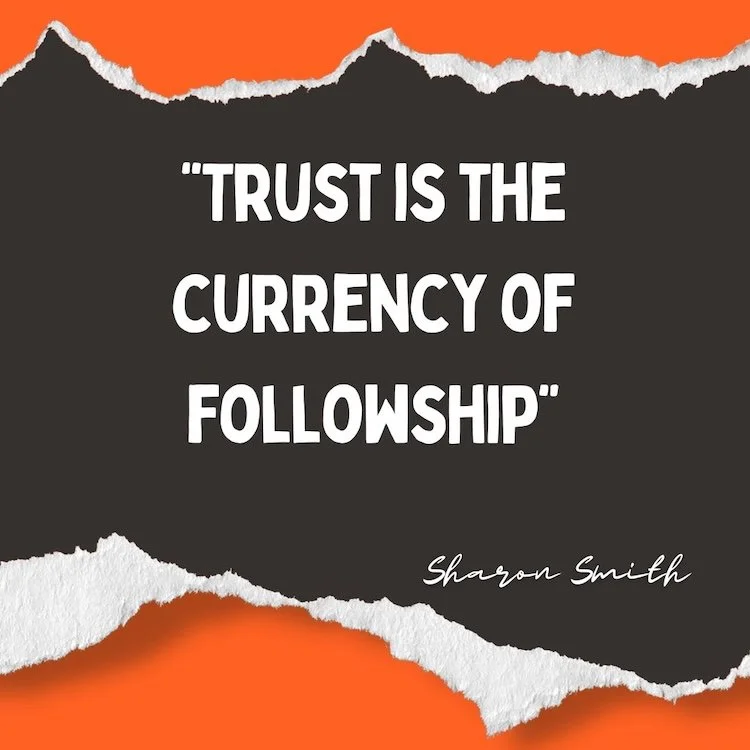
This is where my work on followship offers a useful lens. In my blogs on leadershipping and followship, I explore why people choose to follow at all. Followship is not about obedience or compliance. It is about alignment. It reflects the point at which people trust the direction being set and feel sufficiently safe and valued to contribute fully.
It is leadership as it is experienced by those being led, shaped by trust rather than authority.
Framing leadership in this way shifts the focus. It moves attention away from what the leader is doing, and towards how leadership is being received.
Where leaders get stuck
In practice, I often see leaders becoming stuck at one of two ends of this spectrum.
Some rely heavily on authority as the primary means of leading. Decisions are made, direction is given, and expectations are clear, but limited space is created for contribution, challenge, or shared ownership. Over time, this can create a degree of distance between the leader and the team. People comply, but they may not fully engage.
Others move in the opposite direction and become hesitant to use their authority at all. They prioritise being approachable and supportive, often with a genuine intention to create positive relationships. However, in doing so, they may avoid difficult conversations, delay decisions, or allow standards to become inconsistent.
This is where my work on nice versus kind leadership becomes particularly relevant.
Nice leadership tends to avoid discomfort in order to preserve harmony. Kind leadership, by contrast, is willing to hold clarity and care at the same time. It involves saying what needs to be said, setting expectations, and maintaining standards, while still respecting the individual.
When authority is avoided altogether, it does not strengthen relationships. More often, it creates uncertainty, frustration, and, ultimately, a loss of trust.
People do not only need connection. They also need clarity.
The role of emotional intelligence
Navigating this balance requires a high degree of emotional intelligence.
As explored by Daniel Goleman, emotional intelligence plays a critical role in how leadership is experienced. It shapes how leaders respond to others, how they communicate under pressure, and how effectively they build trust.
While leadership styles are often presented as fixed approaches, they are better understood as different ways of relating to people. Some lean more heavily on direction and output, while others prioritise connection, development, and collaboration.
Effective leadership requires the ability to recognise what is needed in a given moment and to respond in a way that maintains both clarity and trust.
Holding authority differently
In my work with leaders, I also explore this balance through the lens of masculine and feminine leadership energy.
Authority-led environments often emphasise decisiveness, control, and direction. These qualities are important and, at times, necessary. They provide momentum and clarity.
However, when they become dominant, leadership can begin to feel transactional. People may comply with expectations, but they do not always feel connected to the work or to the leader.
Relational leadership introduces balance. It brings emotional awareness, attentiveness to context, and the ability to recognise what is happening beneath the surface.
As I share in myfollowship blog, when leadership is grounded in connection and trust, influence shifts. It becomes less about asserting authority and more about creating the conditions in which people choose to engage and contribute.
This is not about removing authority. It is about how authority is held and expressed.
Authority v leadership: distinction matters
At its core, the difference between authority and leadership lies in how influence is created and sustained.
Authority can direct action and enforce standards, and in doing so it can deliver results. Leadership, however, shapes commitment, builds ownership, and sustains those results over time.
As I have written previously, people do not follow because they have to. They follow because they want to.
That choice is influenced by trust, by consistency, and by the everyday experience of being led.
Authority may provide the position.
Leadership determines whether people choose to follow.
And the leaders who create the greatest and most sustainable impact are not those who reject authority, nor those who rely on it entirely, but those who understand how to use it with intention, clarity, and care.
Reflection
As you consider your own leadership, it may be worth pausing on this distinction:
Where are you relying on authority to carry your leadership?
And where are you intentionally building the trust that invites people to follow?
Because the shift is rarely about doing more.
It is about becoming more aware of how your leadership is experienced, and noticing where a different kind of support, clarity or intention may be needed.
That is where leadership moves beyond position and into practice.
If this has resonated, it may be a sign that you already know something needs to shift.
Understanding the difference between authority and leadership is the first step. The harder part is learning how to hold authority in real conversations, decisions, boundaries and moments of pressure.
That is where coaching can help. If you would like a space to explore how your leadership is being experienced and how to lead with more clarity, trust and intention, I’d welcome that conversation.
You can get in touch with me to explore how we might work together.
