

If you’re a thoughtful, empathetic leader, you’ve probably been described as “nice”.
And while that sounds like a compliment, niceness can quietly undermine your leadership effectiveness.
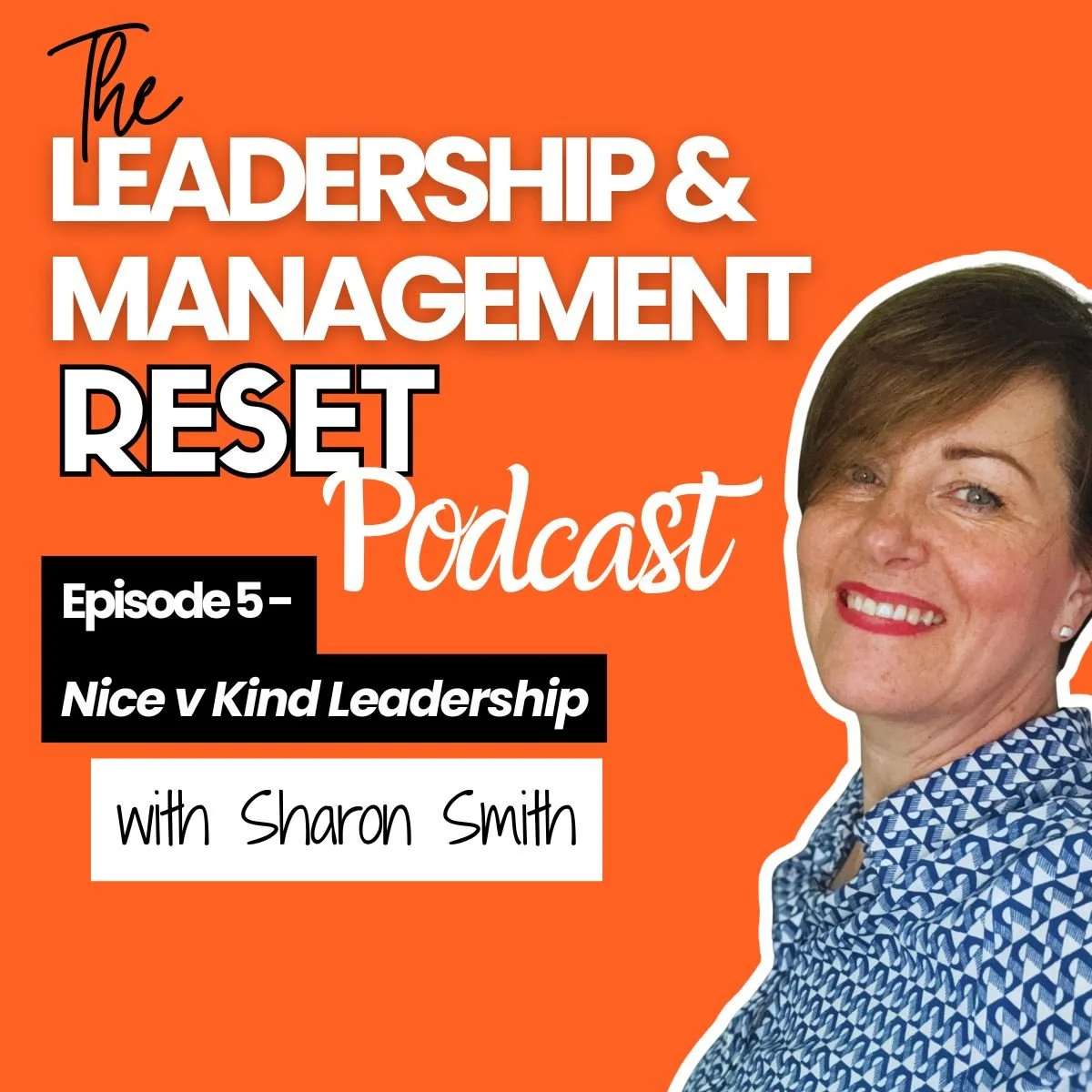
In this episode of The Leadership and Management Reset Podcast, I explore the difference between nice leadership and kind leadership, and why the bridge between the two is Radical Candor - caring personally while challenging directly.
Because nice leadership feels comfortable in the moment. Kind leadership creates growth over time.
Let’s dive into what this episode of The Leadership and Management Reset podcast offers.
In this episode, you’ll discover:
Why being a “nice” leader can unintentionally reduce performance and accountability
The crucial difference between nice leadership and kind leadership
How Radical Candor helps you care personally while still challenging directly
Why avoiding difficult conversations often makes leadership more stressful over time
The difference between psychological safety and psychological comfort
How clear standards actually increase confidence across your team
Why boundaries are essential for sustainable leadership
Simple ways to address issues early before resentment builds
How to give honest feedback without feeling harsh or uncaring
What it really means to lead with compassion and clarity at the same time
More of an audio listener? Listen to this podcast episode instead.
What nice leadership really looks like
Nice leaders often avoid tension because they care about people and relationships. They want harmony, approval, and a positive atmosphere.
This can show up as:
Avoiding difficult conversations
Softening feedback so much it loses meaning
Saying yes when you should say no
Letting standards slip to keep the peace
It can feel compassionate. In reality, it often prioritises the leader’s comfort over the team’s development.
When accountability is avoided, performance drops, resentment builds, and the people who most need feedback are left without the guidance required to improve.
The shift to kind leadership
Kind leadership is not harsh or blunt. It is clear, honest, and grounded in care.
Kim Scott’s concept of Radical Candor captures this well: care personally and challenge directly.
If you truly want people to succeed, withholding honest feedback does not protect them. It limits them.
Kind leaders tell the truth in service of growth.
Psychological safety is not the same as comfort
High-performing teams need psychological safety — the ability to speak up, make mistakes, ask questions, and learn openly.
But safety does not mean the absence of challenge.
The strongest teams combine:
High support
High standards
Your role as a leader is not to eliminate discomfort, but to create an environment where discomfort leads to development rather than fear.
What kind leadership looks like in practice
Kind leadership is visible in everyday behaviours.
Clear standards
Expectations provide direction and confidence. They show belief in what people are capable of.
Healthy boundaries
If you over-function for your team or say yes to everything, you teach others that accountability is optional. Boundaries protect your capacity to lead well.
Early, honest conversations
Address issues before they escalate. Naming patterns early prevents resentment and confusion later.
Regular, specific feedback
Feedback should not be rare or reserved for formal reviews. It should be part of normal team culture - including praise, which helps people feel seen and valued.
You do not need to be more experienced than someone to give feedback. You only need clarity about expectations and impact.
Leadership requires courage, not approval
If you avoid accountability, boundaries, or difficult conversations, you are not being kind — you are protecting yourself from discomfort.
Leadership asks more of you.
It asks you to regulate your emotions, tolerate tension, and prioritise long-term growth over short-term approval.
Being a kind leader is not about being liked. It is about being trusted.
When you own your leadership, you create sustainable impact without overwhelm.
A few questions to reflect on this week
Where might you be choosing nice over kind?
What conversation are you postponing?
What standards have slipped to avoid tension?
What would it look like to challenge directly while still caring personally?
Want support developing confident, kind leadership?
If this resonates, you are not alone - many capable leaders struggle with the shift from approval-seeking to growth-focused leadership. Leadership development is important work.
Through coaching and leadership development, I support leaders to build confidence with boundaries, feedback, and difficult conversations while staying true to their values.
Book a free time with me to discover how I could support you to become a kind leader. You can explore more resources, podcasts, blogs, and programmes across the Own Your Leadership website.
If you’d prefer to listen directly on your favourite podcast platforms, click the links below.
Or if you’d prefer to read the transcript, then please download it by clicking the button below.
