

Why Leaders Avoid Difficult Conversations
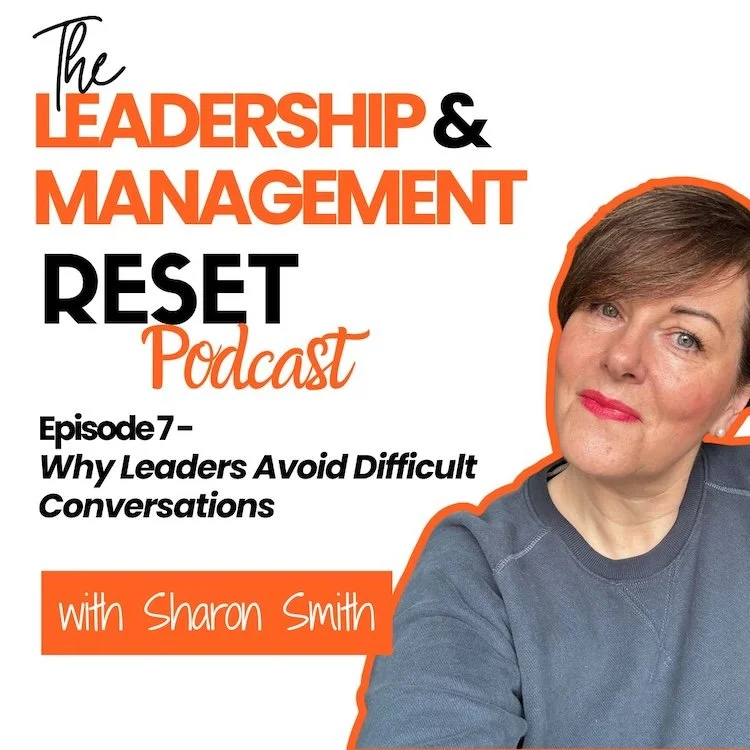
Difficult conversations are part of leadership. Yet so many of us avoid them.
In this episode of The Leadership & Management Reset Podcast, I explore why leaders avoid difficult conversations and why the impact is often far greater than we realise.
This is not about lacking skill or experience. It is about what is happening beneath the surface. The beliefs, discomfort, and internal narratives that shape how you show up in your leadership role.
In this episode, I explore:
Why leaders avoid difficult conversations, even when we know we need to act
The hidden impact avoidance has on your team’s trust and performance
How avoidance lowers standards and creates imbalance across your team
Why your high performers may be carrying more than you realise
The difference between caring and avoiding, and why they are not the same
How radical candour can support a more balanced leadership approach
Simple reflection questions to help you take action
More of an audio listener? Listen to this podcast episode instead.
Why do we avoid difficult conversations?
In my experience, avoiding difficult conversations is rarely about not knowing what to say.
Most of us already know the conversation we need to have. We have replayed it in our heads. We have thought about the outcomes. We understand the importance.
Yet we still delay.
Often, this comes from a desire to be a good leader. To protect relationships. To avoid causing upset. To keep things feeling steady within the team.
But what feels like care in the moment can create confusion, frustration, and misalignment over time.
The real impact of avoiding difficult conversations
When a conversation is avoided, nothing stays still.
I see leaders carry this with them. It sits in the background, taking up energy and attention, often becoming bigger than it needs to be.
It also impacts the individual. They may be unaware and continue behaviours that are not meeting expectations. Or they may sense something is off, which creates uncertainty.
And your team will notice.
Your team always sees what you tolerate. They notice when standards are not upheld consistently. They feel the imbalance when they are working harder to compensate for someone else.
Over time, this starts to erode trust.
Not just between team members, but between the team and you as their leader.
Why being “nice” is not the same as good leadership
One of the biggest patterns I see is leaders avoiding conversations because they care.
But caring without challenge does not build trust.
Equally, challenging without care can feel harsh and unhelpful.
For me, strong leadership sits in the middle. This is where radical candour comes in. Caring personally, whilst also being willing to challenge directly.
It is not always comfortable, but it is what creates clarity and movement.
What is really going on underneath?
When I work with leaders, we often realise this is not actually about the other person.
It is about what is happening internally for you.
You might be worried about being seen as too direct. You might question whether you are right. You might feel uncertain, especially if the person has more experience or a strong personality.
So instead of acting, you stay in short-term comfort.
But leadership asks something different of you.
It asks you to move through that discomfort in service of your team, your standards, and the culture you are creating.
A simple way to approach the conversation
If there is a conversation you are currently avoiding, I invite you to pause and reflect on this:
What is the one thing I am not saying?
What is the cost of my continuing not to say it?
If I approached this from care, not fear, what would I say?
These questions help you shift from avoidance into intention.
Avoidance or leadership: what are you choosing?
Avoidance is not kindness.
Silence is not support.
Leadership is not about comfort. It is about clarity.
Every time you avoid a conversation, you are shaping your team culture. You are showing what is acceptable, what gets overlooked, and what people can expect from you.
And your team is always paying attention.
Final Thought
The conversation you are avoiding today is shaping the culture your team will experience tomorrow.
So the question is:
What are you going to do about it this week?
Want support to overcome your fear of difficult conversations?
Through leadership coaching and development, I support leaders to build confidence, clarity, boundaries, and sustainable leadership habits that actually work in real life.
If you are ready to lead yourself with more intention and less overwhelm, you can book a free call with me to explore how I can support you.
You can also explore more podcast episodes, blogs, and leadership resources across Own Your Leadership.
If you’d prefer to listen on your favourite podcast platform, use the podcast links below.
And if you’d rather read the original transcript, you can download it here.
